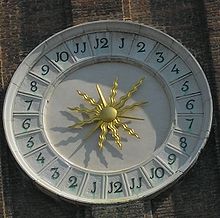
 1 (one, unit, unity) is a number, numeral, and glyph. It is the first and smallest positive integer of the infinite sequence of natural numbers.
 Tenth century “West Arabic” variation of the Nepali form of Hindu-Arabic numerals (compare Devanagari script १ (1, “éka”)), possibly influenced by Roman numeral Ⅰ, both ultimately from using a single stroke to represent the number one.
 Explore the curious properties of number 1, an odd number which is uniquely neither prime nor composite. Includes mathematical info, prime factorization, divisors, bases and much more!